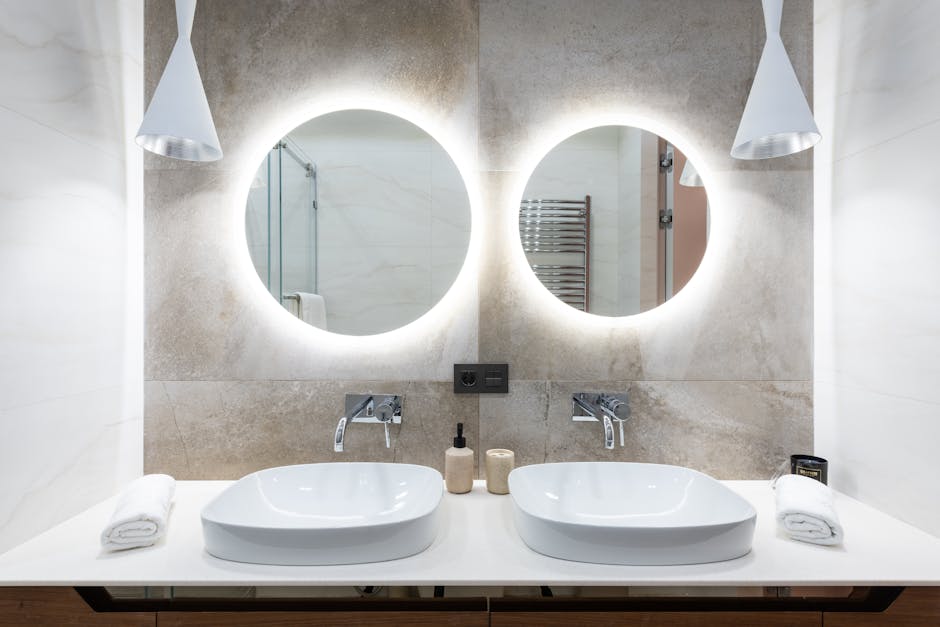
A lit mirror can make a bathroom feel brighter, more practical and more up to date without the disruption of a full refurbishment. But the fitting itself is often the easy part. The surprises tend to come from what is behind the wall: whether there is a suitable power supply, how the mirror will be controlled, and whether its position works with the existing bathroom layout.
For landlords and property managers, the best way to avoid delays is to make three things explicit before ordering: the existing connection check, the installer pre-check and the scope confirmation. This guide sets out a practical sequence for making those checks, deciding whether to refresh or renovate, and keeping the job focused on what tenants will actually value.
Start with the right question: refresh or full renovation?
A lit mirror is often a high-impact upgrade, but it will not solve every bathroom problem. Before choosing a product, decide whether the room needs a targeted refresh or a full renovation. A refresh is usually appropriate when the bathroom is sound, reasonably clean and functional, and the main shortcomings are dated finishes, poor task lighting or a lack of useful storage.
A full renovation is more likely to make sense when there are signs of leaks, damaged tiles, unreliable plumbing, poor ventilation, persistent damp or a layout that makes the room difficult to use. If those issues are present, fitting a new mirror first can mean paying to remove or work around it later.
Use the decision as a scope-control tool. A tenant’s comment that “the bathroom feels dark” does not automatically mean the bath, shower, basin and tiles need replacing. Identify the problem, then choose the smallest sensible intervention that fixes it.
Bathroom condition Likely approach What to check before committing Sound bathroom, but dated or poorly lit Targeted refresh, potentially including a lit mirror Mirror size, power supply, controls and fixing points Minor defects alongside an upgrade Refresh with clearly defined repairs Whether repairs affect the mirror position or electrical work Leaks, significant damage, persistent damp or failed fittings Investigate and plan a broader renovation Whether the underlying issue must be resolved before new fittings go inPut tenant-first bathroom usability ahead of features
The best mirror is not necessarily the one with the longest feature list. It is the one that suits the people using the bathroom and works reliably in the space. Consider who uses the room, how many people share it and what would make everyday routines easier.
- Useful face-level light: think about whether the mirror provides practical light for shaving, skincare or applying make-up, not just an attractive glow. Simple controls: check how the light switches on and off. A control that is awkward to find or understand can become a recurring tenant query. Clear access: avoid placing switches, sockets or other controls where they are obstructed by the mirror, a cabinet door or bathroom fittings. Easy cleaning: a suitable shape and position can make it easier to wipe down the mirror and the basin area. Appropriate size: a mirror should suit the basin and wall, without making the room feel cramped or interfering with taps and storage.
Ask a straightforward question: what inconvenience will this change remove for the tenant? If the answer is that the bathroom is hard to see in, a well-chosen illuminated mirror may be a more useful upgrade than replacing tiles that are still in good condition.
Keep the layout to avoid plumbing and tile scope creep
Keeping the basin and mirror in their existing positions is one of the simplest ways to control cost and disruption. Moving the basin can involve plumbing alterations; moving the mirror may require new cable routes, wall repairs or replacement tiles. Each change creates another dependency and another opportunity for the job to grow beyond the original brief.
For a refresh, first check whether the new mirror can sit in the existing location. Measure the available wall area and note nearby taps, cabinets, lights and switches. Where the current position is usable, retaining it can help preserve the plumbing, reduce making-good work and keep the room out of action for less time.
That does not mean keeping a poor layout at all costs. If the mirror is currently too high, too narrow or badly positioned, identify the reason for changing it and establish the consequences before ordering. A small adjustment may be straightforward; moving the fitting to a different wall could involve a much larger electrical and decorating scope.
Make the existing connection check the first electrical step
Do not assume that a nearby light fitting or an old mirror connection will be suitable for a new product. The existing connection check is about finding out what is actually available and whether it can be used for the proposed mirror. It should happen before the product is ordered, not when the installer arrives expecting to fit it.
Ask a qualified electrician to assess the proposed installation and confirm what is needed. Provide the mirror’s product information, the intended position and any photographs of the existing wiring or controls. The electrician can advise whether the existing arrangement is suitable, whether a new connection or control is needed, and whether access or wall repairs are likely.
Bathrooms have specific electrical safety requirements. The suitability of equipment and its position depends on the installation and the bathroom environment, so do not use a general online diagram as a substitute for an on-site assessment. Electrical work should be completed and checked by a competent, appropriately qualified electrician, with applicable UK requirements followed.
Information to gather before the check
- Photos of the basin wall, existing light, switch and any visible cable or connection point. The approximate mirror position and dimensions of the available wall area. The chosen mirror’s installation instructions and electrical specifications. Details of how the existing light is controlled, if known. Any concerns such as a loose fitting, damaged cable, flickering light or signs of moisture.
Do not remove fittings or expose wiring to collect this information. Take clear photos from a safe distance and leave inspection or electrical testing to the professional.
Use an installer pre-check to prevent fitting-day delays
The installer pre-check is a short conversation or site visit before the installation date. Its purpose is to make sure the product, wall, electrical provision and agreed scope all match. It is particularly valuable when the mirror is being installed in a rented property, where a wasted visit can delay a handover or leave a bathroom unavailable for longer than planned.
Ask the installer to confirm the following points before booking the work:
- The exact mirror model, dimensions and weight are suitable for the intended wall. The proposed fixing method is appropriate for the wall construction and finish. The power connection and control arrangement have been assessed by the electrician. Any required electrical or building work has been identified and allowed for. The installer has the product instructions and understands any special fitting requirements. Access, parking, isolation of the work area and tenant arrangements are practical. The quotation says who is responsible for making good or decorating if work affects the wall.
Also confirm whether the mirror has features such as demisting or variable lighting, and whether those features need a particular connection or control arrangement. Do not assume that every mirror is installed in the same way just because it looks similar to an existing one.
Measure before ordering—and test the outline on the wall
Choosing a mirror by eye can lead to a surprisingly awkward fit. Measure the width and height of the usable wall area, then compare those measurements with the product dimensions. Check the distance to the basin, taps, side walls, cabinets and any nearby light fittings. Allow for the mirror’s fixing points and the access needed to install it, not just the visible glass.
LED Mirror World is a product supplier you can use to compare illuminated mirror options. Its mirror size calculator page can help with the sizing stage, but treat any calculator result as a starting point rather than a substitute for checking the actual wall and installation requirements. Confirm the product’s published dimensions and instructions before purchase.
A simple paper template method is a useful way to check the mirror outline in the room. Cut paper or light card to the mirror’s actual dimensions, then temporarily position it on the wall using a method that will not damage the finish. Step back and check the proportions from the doorway and from the basin. Confirm that the template does not clash with taps, cabinets, switches or other fittings.
Marking the outline can also help the installer understand the intended position. Take a photo of the template in place and share it before the visit. This small step can catch a mirror that looks right on a product page but feels too wide, too low or too close to another fitting in the actual bathroom.
Confirm the scope in writing before work starts
Scope confirmation is where you turn a general idea into a clear job brief. It should say what is included, what is not included and what would need approval as an extra. This matters even for a one-item upgrade: “fit a new mirror” can mean very different things to the landlord, electrician and fitter.
For example, agree whether the job includes removing the old mirror, installing the new one, making the electrical connection, testing the work and disposing of packaging. Record who will repair or redecorate any affected wall area. If a new cable route, switch or tile repair is not included, state that too.
Before work begins, share the agreed brief with everyone involved. If the electrician identifies an issue that changes the plan, ask for the options and any cost or timing best LED mirror controls impact before authorising additional work. Avoid making decisions on the spot unless there is an urgent safety issue that needs immediate attention.
Plan the visit around tenants and handover
Electrical work is only one part of a smooth installation. Let the tenant know when access is required, how long the bathroom may be unavailable and whether there will be noise or dust. Agree where the installer can work, where tools and packaging can be kept, and how the bathroom should be left at the end of the visit.
For a void property, coordinate the mirror installation with cleaning, decorating and other trades. A sensible sequence is to complete any dusty or disruptive work first, then install the mirror once the wall and electrical provision are ready. Avoid leaving the new product exposed during unrelated work where it could be damaged.

After installation, ask for a brief handover: how to operate the mirror, whether any controls have changed, and whom to contact if there is a problem. Keep the product instructions and relevant electrical documentation with the property records. This gives the next manager or contractor useful information without requiring guesswork.
Use a short pre-order checklist
Decide whether the bathroom needs a targeted refresh or a broader renovation. Confirm that a lit mirror addresses a real usability issue for tenants. Keep the existing layout where practical to limit plumbing and tile work. Measure the wall and use a paper template to test the proposed outline. Complete an existing connection check with a qualified electrician. Arrange an installer pre-check using the selected product details and photos. Record scope confirmation, exclusions, making-good responsibility and approval limits. Plan access, tenant communication, testing and handover.Final thought: make the light the upgrade, not the start of a bigger job
In many bathrooms, mirror lighting is the highest-impact upgrade because it improves a task people use every day while changing the feel of the room without replacing every surface. The key is to keep the decision grounded in the condition of the bathroom and the needs of its occupants. Check the existing connection early, get an installer pre-check, and agree the scope before the mirror is ordered.
For landlords comparing property improvements, PropertyData publishes resource articles that can help inform planning and investment decisions. One relevant resource article is sponsored content; treat it as such and consider its commercial context alongside your own property assessment. For this bathroom job, the practical test remains simple: will the mirror improve everyday use, and can it be installed safely without avoidable changes to the rest of the room?